


iPhone vs Android: Which One Should You Buy? 2026 Guide
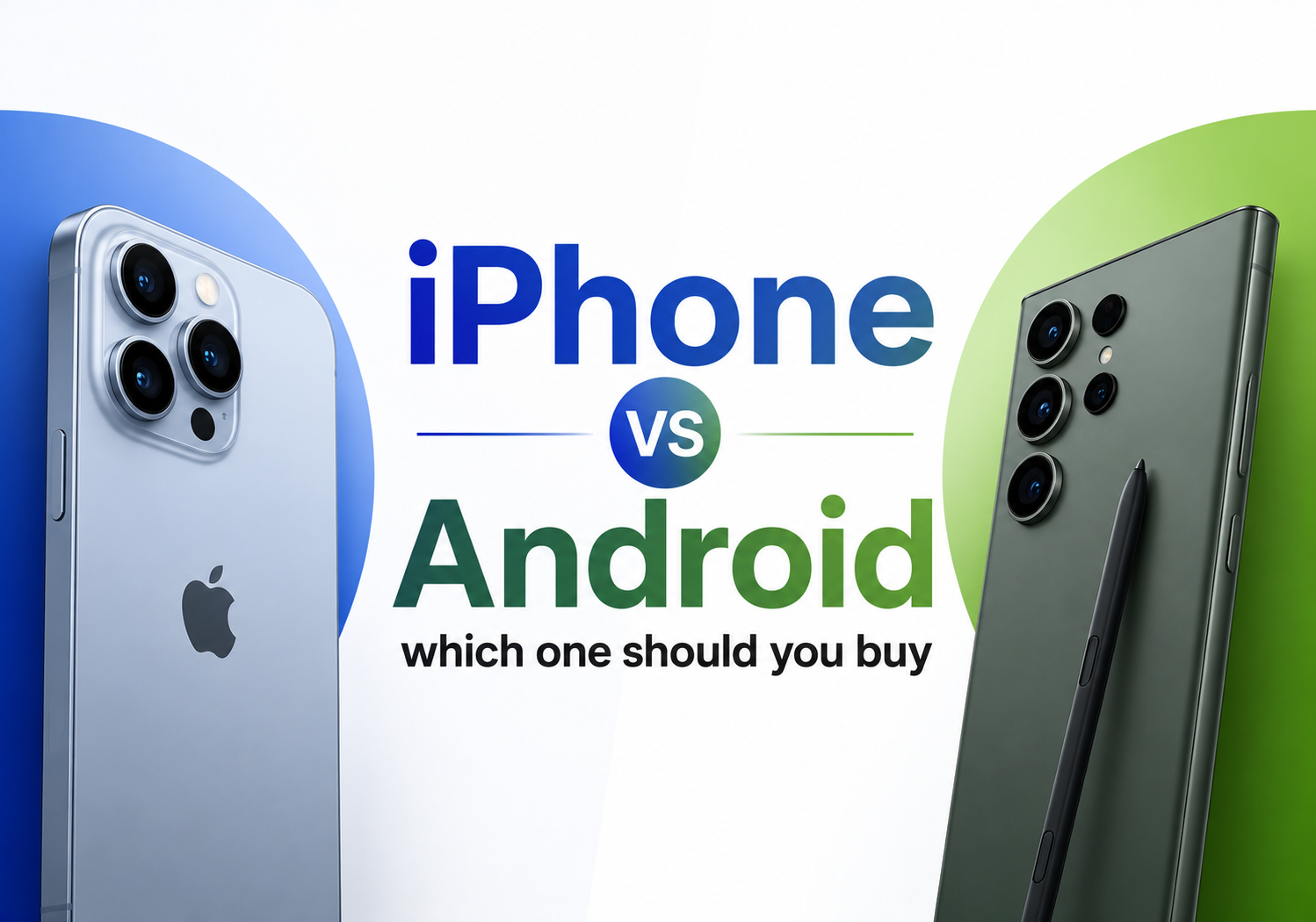
একদিকে iPhone-এর smooth ecosystem, consistent software experience এবং strong resale value। অন্যদিকে Android-এ একই budget-এর মধ্যে dozens of choices, different camera setups, faster charging, foldable designs এবং নিজের মতো করে phone সাজানোর অনেক freedom।
সুতরাং নতুন smartphone কেনার সময় iPhone vs Android decisionটা শুধু Apple নাকি Samsung পছন্দ করেন, সেই জায়গায় আটকে রাখলে useful comparison হবে না।
ধরুন আপনার budget ৳50,000। এই budget-এ একটি older বা used iPhone এবং একটি new mid-range Android পাশাপাশি পাওয়া যেতে পারে। একটি option camera consistency ও long-term value-তে এগিয়ে থাকতে পারে, অন্যটি bigger battery, high-refresh display, more storage এবং faster charging দিতে পারে।
আবার flagship budget-এ গেলে comparison আরও interesting হয়। বর্তমান premium Android phones দীর্ঘ software support দিচ্ছে, advanced AI features যোগ করছে এবং camera hardware নিয়ে aggressive হচ্ছে। iPhone এখনও video recording, Apple ecosystem এবং consistent app experience-এর জন্য strong choice।
এই iPhone vs Android 2026 guide-এর উদ্দেশ্য winner ঘোষণা করা নয়। আপনার usage-এর জন্য কোন platform বেশি logical purchase হবে, সেটি বের করাই মূল লক্ষ্য।
iPhone vs Android: Quick Comparison
| Category | iPhone | Android |
|---|---|---|
| Ease of Use | Excellent | Excellent, varies by brand |
| Budget Choices | Limited | Excellent |
| Customization | Moderate | Excellent |
| Camera | Consistent | More variety |
| Video Recording | Excellent | Excellent on flagships |
| Battery | Model-dependent | Wider choice |
| Fast Charging | Usually moderate | Often faster |
| Gaming | Excellent | Excellent, more gaming-phone options |
| Software Updates | Strong | Strong on selected brands |
| Ecosystem | Excellent with Apple devices | Flexible across brands |
| File Management | More controlled | More flexible |
| Resale Value | Usually strong | Varies significantly |
| Repair Cost | Can be expensive | Wide range |
| Device Variety | Limited | Huge |
There is no universal winner in this Android vs iPhone comparison. The better choice changes according to budget and priorities.
Price: Android Gives You More Ways to Spend Your Money
Android’s biggest advantage appears before the phone is even switched on: choice.
Android phones are available across almost every price range. Entry-level, mid-range, flagship, gaming phone, compact phone, rugged model and foldable—buyers can choose between many manufacturers.
Popular Android brands include:
- Samsung
- Google Pixel
- Xiaomi
- OnePlus
- Nothing
- Motorola
- Honor
- Oppo
- Vivo
- Realme
Apple’s lineup is much simpler. You choose between current iPhone models, previous-generation devices and the used or refurbished market.
This means Android usually offers more flexibility if your budget is fixed.
For example, a mid-range Android may offer:
- 120Hz AMOLED display
- 8GB or 12GB RAM
- 256GB storage
- Large battery
- Fast charging
- Multiple rear cameras
An iPhone at a similar price may win in other areas, but the raw specification sheet can look less aggressive.
So, iPhone or Android which is better for value?
For buyers who want maximum hardware features at a specific budget, Android normally gives more options. For buyers who care about long-term resale value, software consistency and Apple ecosystem integration, the iPhone can still justify its higher entry price.
iPhone Is Easier When You Want Things to Feel Consistent
Apple controls both iPhone hardware and iOS. This gives it tight control over menus, animations, updates and integration between different Apple devices.
Once someone understands one recent iPhone, moving to another feels familiar.
This consistency is useful for users who don’t enjoy changing settings or comparing dozens of software features.
Android experience depends more on the manufacturer.
A Google Pixel does not feel exactly like a Samsung Galaxy. Samsung One UI, Google’s Pixel interface and other Android skins can have different menus, features and pre-installed apps.
That is not automatically a disadvantage.
Some people enjoy having those choices. Others simply want a phone that behaves predictably.
This is one of the biggest differences in the iOS vs Android experience.
iPhone vs Android Camera: Which Takes Better Photos?
The old answer of “iPhone has the best camera” is too simple in 2026.
Premium Android phones can compete directly with iPhones and sometimes offer camera hardware that Apple does not match in the same way.
The important question is what type of photo or video you take.
iPhone Camera Strengths
iPhones are particularly good at:
- Consistent colour between lenses
- Reliable point-and-shoot photography
- Video recording
- Stabilization
- Social-media video workflow
- Natural transitions between cameras
For someone who records a lot of Reels, TikTok clips, interviews or family video, that consistency can be valuable.
Android Camera Strengths
Premium Android phones often offer:
- Higher zoom ranges
- Larger camera sensors on selected models
- More manual controls
- Strong computational photography
- Different portrait styles
- More camera hardware choices
Google Pixel phones are known for computational photography, while Samsung’s Ultra models focus heavily on camera versatility and zoom.
So the iPhone vs Android camera winner depends on what you shoot.
For easy, consistent video: iPhone is an easy recommendation.
For zoom, photography experimentation or wider hardware choice: Android may be more interesting.
iPhone vs Android Battery Life: Look at the Phone, Not the Logo
Battery life cannot fairly be compared by operating system alone.
A large Android flagship may last longer than a smaller iPhone. Another Android model with an inefficient processor may perform worse.
The same applies within Apple’s lineup.
When comparing iPhone vs Android battery life, look at:
- Real-world battery tests
- Screen size
- Processor efficiency
- Battery capacity
- Refresh rate
- Mobile-network usage
- Camera usage
- Always-on features
Android does have one clear advantage in this category: charging choice.
Many Android manufacturers offer much faster wired charging than Apple. Some phones can recover a large amount of battery during a short coffee break.
iPhone charging tends to be more conservative, although Apple’s magnetic charging ecosystem is convenient.
If fast charging is a top priority, Android generally gives you more options.
iPhone or Android for Gaming?
Modern flagship phones from both sides are extremely capable gaming devices.
So, iPhone or Android for gaming depends on what kind of gamer you are.
iPhone Makes Sense When You Want
- Strong flagship performance
- Consistent game optimization
- Good controller support
- High-quality display
- Long-term performance
- A phone that is also excellent for normal daily use
Android Makes Sense When You Want
- Dedicated gaming phones
- Larger batteries
- Advanced cooling
- Gaming triggers
- Very high refresh-rate displays
- Faster charging
- More performance-focused options
Android manufacturers can build devices specifically around gaming because there is no single hardware design they must follow.
For PUBG Mobile, Call of Duty Mobile, Genshin Impact or competitive games, a flagship from either platform can perform well.
Hardcore mobile gamers may find Android gaming phones more flexible.
Apps: Most Popular Services Work Well on Both
For normal users, app availability is no longer a major reason to choose one platform over the other.
Apps such as:
- Messenger
- TikTok
- YouTube
- Netflix
- Spotify
- Gmail
- Google Maps
- Microsoft Office
are available on both.
Differences appear in smaller details.
Because Apple has fewer current hardware configurations to support, developers can sometimes optimize an iOS app more consistently.
Android developers must account for a much wider variety of displays, processors and manufacturers.
However, Android also offers greater flexibility around default apps, file access and device-to-device workflows.
For most buyers, app availability should not decide the entire purchase.
Android Customization Is Still a Major Advantage
This is one area where Android remains the obvious choice for people who like control.
Android customization can include:
- Custom launchers
- Icon packs
- Widgets
- Home-screen grids
- Default apps
- Keyboard choices
- Lock-screen options
- Themes
- File managers
- Automation apps
Modern iOS offers considerably more customization than older versions did, including home-screen widgets, lock-screen personalization and icon appearance.
Even so, Android generally lets users change more of how the phone looks and behaves.
If you enjoy setting up a phone exactly your way, Android will probably feel less restrictive.
If you rarely change the default wallpaper, this advantage may not matter much.
iPhone vs Android Security: The Gap Is Smaller Than It Used to Be
Security conversations often become exaggerated.
Both modern iPhones and reputable Android devices include strong protections such as app permissions, encryption, biometric authentication, lost-device tools and regular security patches.
Apple benefits from controlling its hardware, operating system and update distribution. Current iPhones also receive ongoing security fixes, including Apple’s newer Background Security Improvements between larger software releases.
Android has also become significantly stronger. It includes privacy controls for camera, microphone and location access, permission management and built-in protections against malicious apps.
So what does iPhone vs Android security actually mean for buyers?
iPhone provides a highly controlled security environment across its supported devices.
Android security depends partly on which manufacturer you buy from and how long that manufacturer supports the model.
Buying a current Google Pixel or Samsung flagship is very different from buying an inexpensive Android phone that receives only limited updates.
Is iPhone Safer Than Android?
Is iPhone safer than Android?
For the average user, iPhone’s tightly controlled software distribution and consistent update delivery make security management straightforward.
But a properly updated Android from a manufacturer with strong security support can also provide excellent protection.
Your own behaviour matters too.
On either platform, avoid:
- Unknown download links
- Suspicious apps
- Fake banking pages
- Sharing verification codes
- Weak screen locks
- Ignoring software updates
A secure phone can still be compromised by poor account security or phishing.
Software Updates: Android Has Caught Up Significantly
Long software support used to be one of Apple’s easiest wins.
That comparison is much closer now.
Google officially provides Pixel 8 and newer models with seven years of operating-system and security updates from their original availability date.
Samsung’s current Galaxy S26 series also comes with seven generations of OS upgrades and seven years of security updates.
This makes iPhone vs Android for long term use more competitive than it was several years ago.
However, Android support still varies by manufacturer and model.
One Android phone might receive seven years of support. A cheaper model from another brand may receive much less.
Apple’s advantage is consistency across its relatively small product family. Android’s advantage is that leading brands now offer genuinely long support on selected devices.
Ecosystem: Your Other Devices May Decide for You
Sometimes the best phone decision has almost nothing to do with the phone.
If you already use:
- MacBook
- Apple Watch
- AirPods
- iPad
- Apple TV
an iPhone usually makes the whole setup work more smoothly.
Features such as AirDrop, device syncing, calls across Apple devices and Apple Watch integration become difficult to give up once they are part of your workflow.
Android has its own ecosystem benefits.
Samsung phones work closely with Galaxy Watches, tablets, earbuds and Windows PCs. Google services work across almost everything, including iPhones.
Android’s ecosystem tends to be more open across brands.
Apple’s ecosystem tends to be tighter within Apple products.
File Management: Android Feels More Like a Computer
People who regularly move files between a phone and computer may prefer Android.
Android generally offers more direct control over folders, downloads and USB file transfers.
This is useful for:
- Video files
- Music collections
- Documents
- Website files
- ZIP archives
- Photography
- Work files
iPhone file management has improved considerably, but Apple’s approach remains more controlled.
If your phone is mainly a communication and media device, the difference may not matter.
If you treat your phone like a portable computer, Android’s flexibility can be valuable.
Resale Value: iPhone Usually Has an Advantage
A smartphone’s real cost is not only what you pay today.
What you can sell it for three years later also matters.
iPhones traditionally maintain strong demand in the used-phone market. A well-maintained older iPhone can still have substantial resale value.
Android resale value varies more.
Popular Samsung flagships and Google Pixels may retain reasonable value, while many mid-range Android devices depreciate faster.
This means an expensive iPhone can sometimes cost less over several years than its purchase price initially suggests.
Before buying, compare:
Purchase price – expected resale price = approximate ownership cost
It is not a perfect calculation, but it gives a better picture than purchase price alone.
Which Is Better for Students, iPhone or Android?
Which is better for students, iPhone or Android?
For most students, budget should come before brand.
Android is attractive because students can find strong options at almost every price point, often with large batteries, good displays and generous storage.
Android may be better if you need:
- Lower purchase price
- More storage
- Long battery life
- Fast charging
- Flexible file transfer
- Split-screen multitasking
An iPhone may make more sense if:
- You already own a MacBook or iPad
- Camera and video are important
- You plan to keep the phone for several years
- Resale value matters
- Your budget comfortably covers it
Do not stretch a student budget simply to get one platform over the other.
A well-chosen mid-range Android can be a better purchase than an iPhone that forces you to compromise elsewhere.
Should I Buy iPhone or Android in 2026?
Should I buy iPhone or Android in 2026 comes down to priorities rather than specifications alone.
Buy an iPhone If You Care Most About
- Simple and consistent software
- Apple ecosystem integration
- Video recording
- Strong resale value
- Long-term ownership
- Reliable app optimization
- Apple Watch compatibility
Buy Android If You Care Most About
- More phone choices
- Better options at lower budgets
- Customization
- Fast charging
- File management
- Gaming-focused hardware
- Foldable phones
- Different camera systems
- More hardware experimentation
Which Lasts Longer, iPhone or Android?
Which lasts longer, iPhone or Android?
A good device from either platform can now last many years.
iPhones have a strong reputation for long software support and resale value.
Premium Android support has improved substantially. Google promises seven years of updates for Pixel 8 and newer models, while Samsung offers seven years of security support on its Galaxy S26 series.
Physical longevity still depends on:
- Battery health
- Storage capacity
- Repair availability
- Software support
- Charging habits
- Accidental damage
- Performance requirements
If long-term use is the priority, do not compare “Android” as one category. Check the update promise of the exact Android model you plan to buy.
Used iPhone vs New Android: Which Makes More Sense?
This is especially relevant for budget-conscious buyers.
Suppose the same money gets you:
Used iPhone
- Older flagship processor
- Good camera
- Strong video
- Established resale market
- Unknown battery wear
New Android
- New battery
- Warranty
- Larger display
- More storage
- Faster charging
- Newer design
Neither is automatically better.
Used iPhone makes sense when device condition is excellent, battery health is acceptable and long software support remains.
New Android makes sense when warranty, battery, storage and modern hardware matter more.
Always compare the actual phones, not only their operating systems.
iPhone vs Android: Decision by User Type
For Simple Everyday Use
iPhone: Excellent
Android: Excellent
Choose based on budget and ecosystem.
For Budget Buyers
Winner: Android
There are far more good low-cost and mid-range options.
For Content Creators
Slight edge: iPhone for video
Android flagships remain extremely competitive for photography.
For Mobile Gaming
Winner depends on device
iPhone offers powerful mainstream performance. Android offers more dedicated gaming hardware.
For Customization
Winner: Android
The platform gives users significantly more control.
For Apple Device Owners
Winner: iPhone
The ecosystem benefits are difficult to ignore.
For Fast Charging
Winner: Android
Many Android manufacturers offer substantially faster charging options.
For Resale Value
Generally: iPhone
Used-market demand tends to remain strong.
For Long Software Support
Both can be excellent
Apple remains strong, while selected Pixel and Samsung models now offer seven-year support commitments.
Frequently Asked Questions
iPhone or Android Which Is Better?
iPhone or Android which is better depends on what matters most to you. iPhone excels in ecosystem integration, video, consistency and resale value. Android leads in choice, customization, charging options and price flexibility.
Is iPhone Safer Than Android?
iPhone provides a tightly controlled software and update environment. Modern Android phones from reputable manufacturers also have strong security systems. Regular updates and safe user behaviour are important on both.
Which Lasts Longer, iPhone or Android?
iPhones historically perform well for long-term ownership, but current Google Pixel and premium Samsung phones also provide long update commitments. Battery condition and hardware quality matter as much as the operating system.
Which Is Better for Students, iPhone or Android?
Android usually offers better choices for limited budgets. An iPhone makes sense for students already using Apple devices or those prioritizing camera, resale value and long-term ownership.
Which Has Better Cameras, iPhone or Android?
There is no single winner. iPhone is particularly strong for consistent video and easy point-and-shoot results. Premium Android phones can provide excellent still photography, zoom and more camera options.
Is Android Better for Customization?
Yes. Android generally provides more control over launchers, themes, default apps, home screens, widgets and file management.
Which Is Better for Gaming?
Both platforms can deliver excellent gaming performance. iPhone offers strong optimization, while Android has more gaming-focused devices with cooling systems, larger batteries and gaming controls.
Final Verdict: iPhone or Android?
After comparing iPhone vs Android, the most useful conclusion is not that one platform defeats the other.
Choose iPhone when you want a polished system, strong video recording, high resale value and seamless integration with other Apple products.
Choose Android when you want more control over price, specifications, design, charging, file management and customization.
For buyers under a fixed budget, Android often provides more hardware for the money. For someone already deep inside Apple’s ecosystem, switching to Android may save money on the phone but create inconvenience elsewhere.
And if both platforms fit your budget, stop comparing logos and compare the actual devices instead:
- Camera quality
- Battery life
- Display
- Storage
- Software-support period
- Repair cost
- Warranty
- Charging speed
- Resale value
That approach makes the iPhone vs Android decision much easier—and usually leads to a phone you will be happier using for the next several years.